
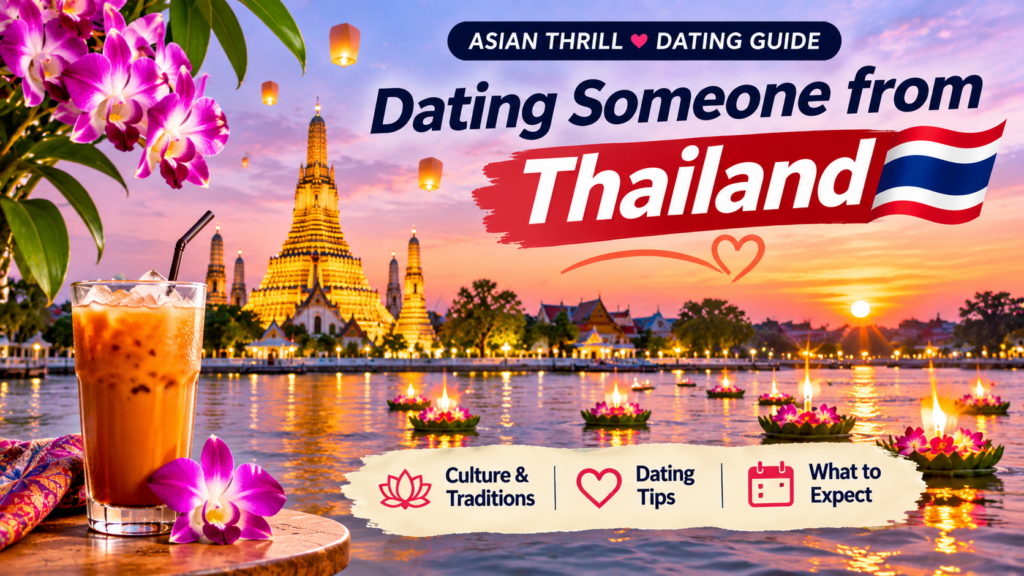
Dating someone from Thailand often means getting to know a person who values family, calm good manners, and a relaxed, good-humored approach to life. Learning a few cultural basics, such as the wai greeting, why keeping a “cool heart” matters, how Buddhism shapes daily life, and what sin sod really is, helps you build trust and avoid early misunderstandings.
Every person is different, of course. Someone from Bangkok may see things very differently from someone raised in Chiang Mai, a farming village in Isan, a southern beach town, or a Thai family living abroad. Treat this guide as an introduction to patterns many Thai people will recognize, not a set of rules about any one person.
Why does family matter so much in Thai relationships?
Family sits at the heart of Thai life. Children are raised to show gratitude to their parents for everything they have been given, and many adults help support their parents financially, especially in rural areas where pensions are small. Grandparents, aunts, uncles, and cousins are often closely involved in each other’s lives.
What this means for you:
- Meeting the family is a meaningful step. Being introduced to parents, even on a video call, usually shows your partner is serious about you.
- Parents’ comfort matters. Your partner will usually want their family to feel at ease with you. Politeness, patience, and genuine interest go a long way.
- Helping family is normal. A partner who sends part of their income home is usually following a deeply held custom, not looking for money from you. Understanding this early prevents a lot of confusion later.
What is the wai, and when should you use it?
The wai is the traditional Thai greeting: palms pressed together at chest level with a slight bow of the head. It is used to say hello, goodbye, thank you, and sorry, and it shows respect.
- Younger people wai first to older people, and the higher the hands and deeper the bow, the more respect is shown.
- Return a wai from an adult, especially your partner’s parents or elders. A warm, simple wai when you first meet the family makes a very good impression.
- You don’t need to wai everyone. Shop staff or children who wai you usually just get a smile and a nod in return.
What do “jai yen,” “kreng jai,” and “sanuk” mean?
Three ideas explain a lot about Thai social life:
- Jai yen (a cool heart). Staying calm and keeping your temper is highly valued. Raising your voice or showing anger in public causes embarrassment for everyone and can damage trust quickly.
- Kreng jai (consideration). Thai people often avoid putting others out or causing awkwardness. Your partner may not say “no” directly or may hesitate to ask for something they need, so gentle, open questions help.
- Sanuk (fun). Life should be enjoyable. Humor, shared meals, and light-hearted moments matter, and a good sense of humor is a real asset in a relationship.
How does Buddhism shape everyday life?
Most Thai people are Theravada Buddhist, and Buddhism shapes daily habits as much as formal worship. Many families give food to monks in the morning, visit temples on special days, and keep a small shrine at home. Thailand also has Muslim, Christian, and other communities, so ask rather than assume.
A few points of respect:
- At temples, cover your shoulders and knees, take off your shoes before entering buildings, and never point your feet toward a Buddha image or a monk.
- Women should not touch monks or hand things to them directly, so follow your partner’s lead when visiting.
- The head and feet matter. The head is considered the most respected part of the body and the feet the lowest. Avoid touching someone’s head and don’t use your feet to point at people or move objects.
- Speak respectfully about the monarchy. The royal family is held in high regard, and Thailand has strict laws on this subject.
Why does Songkran matter so much?
Songkran, the Thai New Year in mid-April, is the biggest family holiday of the year. Many people travel back to their home provinces to see parents and grandparents. Alongside the famous water celebrations, there is a quieter tradition of pouring scented water over elders’ hands to show respect and receive their blessings.
If your partner goes home for Songkran, they may be busy with family for several days. Wishing them and their family a happy new year, or joining a video call with their relatives, is a thoughtful gesture. Loy Krathong in November, when people float small decorated baskets on rivers, is another special occasion that many couples enjoy together.
How do Thai couples address each other?
Thai uses forms of address that reflect age and closeness. Couples often call each other phi (for the older partner) and nong (for the younger one), which sounds affectionate rather than formal. Khun is a polite title used with first names, similar to “Mr.” or “Ms.”
Most Thai people also have a short nickname, such as Ploy, Nok, or Beer, which friends and family use every day. Don’t be surprised if your partner’s nickname has nothing to do with their official name. Using it is a natural sign of closeness.
How does dating usually progress?
Many Thai people prefer a gradual, respectful pace, particularly with someone they met online or who lives in another country:
- Friendly chat and getting to know each other, often with lots of messages, photos of daily life, and food.
- Regular video calls, which help build trust and confirm you are who you say you are.
- Talking about the future: work, where you might live, and what you both want.
- Meeting family, first by video and later in person.
- A visit, often with family or friends involved, especially early on.
Public displays of affection are fairly reserved in Thailand, particularly outside big cities. Holding hands is usually fine, but kissing in public can make your partner uncomfortable.
What is sin sod, and how should you approach it?
Sin sod is a traditional payment from the groom to the bride’s family at an engagement or wedding. It honors the parents for raising their daughter and shows that the groom can support a family. Amounts vary widely depending on the region, the family, and their circumstances, and in some families part or all of it is quietly returned to the couple after the ceremony.
Sin sod is a real custom, not a scam, but it should be discussed openly, calmly, and well in advance, ideally with your partner and, when the time comes, with the family. It belongs to a genuine engagement after you have met in person, not to an online relationship that has only just started.
Language and communication tips
- Learn a few words. Sawasdee (hello), khop khun (thank you), and mai pen rai (no problem, never mind) are easy to learn and always appreciated.
- Add a polite particle. Men end sentences with krap and women with ka. It sounds warm and respectful.
- Keep it simple. If English is your partner’s second language, use clear sentences and avoid slang or sarcasm, which rarely translates well.
- Read between the lines. Because of kreng jai, “maybe” or “let me think” can mean “no.” Ask gently and give your partner room to answer honestly.
Food, smiles, and everyday connection
Food is central to Thai life, and “Have you eaten yet?” (gin khao rue yang?) is a common way of showing you care. Asking about favorite dishes, trying street food together, or learning to cook a simple Thai meal are easy ways to connect.
Thailand is called the “Land of Smiles,” but a smile can mean many things: happiness, politeness, embarrassment, or simply keeping things calm. Over time you will learn to read your partner’s smiles, and patience helps.
Stereotypes to leave behind
Thai women and men are sometimes stereotyped online in ways that are unfair and disrespectful. The people you meet on a serious dating site are teachers, nurses, business owners, students, office workers, and parents looking for a sincere partner, just like you. Treat your match as an individual with their own goals, career, and opinions, and you will build a far stronger relationship.
Family support vs. scam requests
Because helping family is normal in Thailand, it is important to know the difference between a genuine cultural custom and a scam:
- Normal: your partner supports their own parents from their own income, or you discuss sin sod openly as part of a real engagement after meeting in person.
- Warning signs: someone you have never met asks you for money for a sick buffalo, a hospital bill, a visa, a plane ticket, or a “family emergency,” often with urgency and pressure.
Never send money to someone you haven’t met in person, no matter how real the relationship feels. Read our guide to romance scam red flags to learn the most common tricks and how to protect yourself.
Practical tips for a strong start
- Use video calls early to build trust and confirm you are both genuine.
- Show respect for family, and learn the wai before meeting parents.
- Keep a cool heart. Stay calm, kind, and patient, even when things are frustrating.
- Learn a few Thai words and your partner’s nickname.
- Ask gentle, open questions so your partner feels comfortable saying what they really think.
- Plan a first visit carefully, meet in public places, and handle your own bookings.
The bottom line
Dating someone from Thailand often means joining a warm, close family and a culture that values respect, calm, and a good sense of humor. Learn the basics of Thai manners, take a real interest in your partner’s family and traditions, and communicate patiently and honestly. Those habits build the kind of trust that lasting relationships depend on.
Interested in other cultures too? Read our guides to dating someone from Vietnam and dating someone from the Philippines, and make a strong first impression with our tips on writing a dating profile that gets replies.
